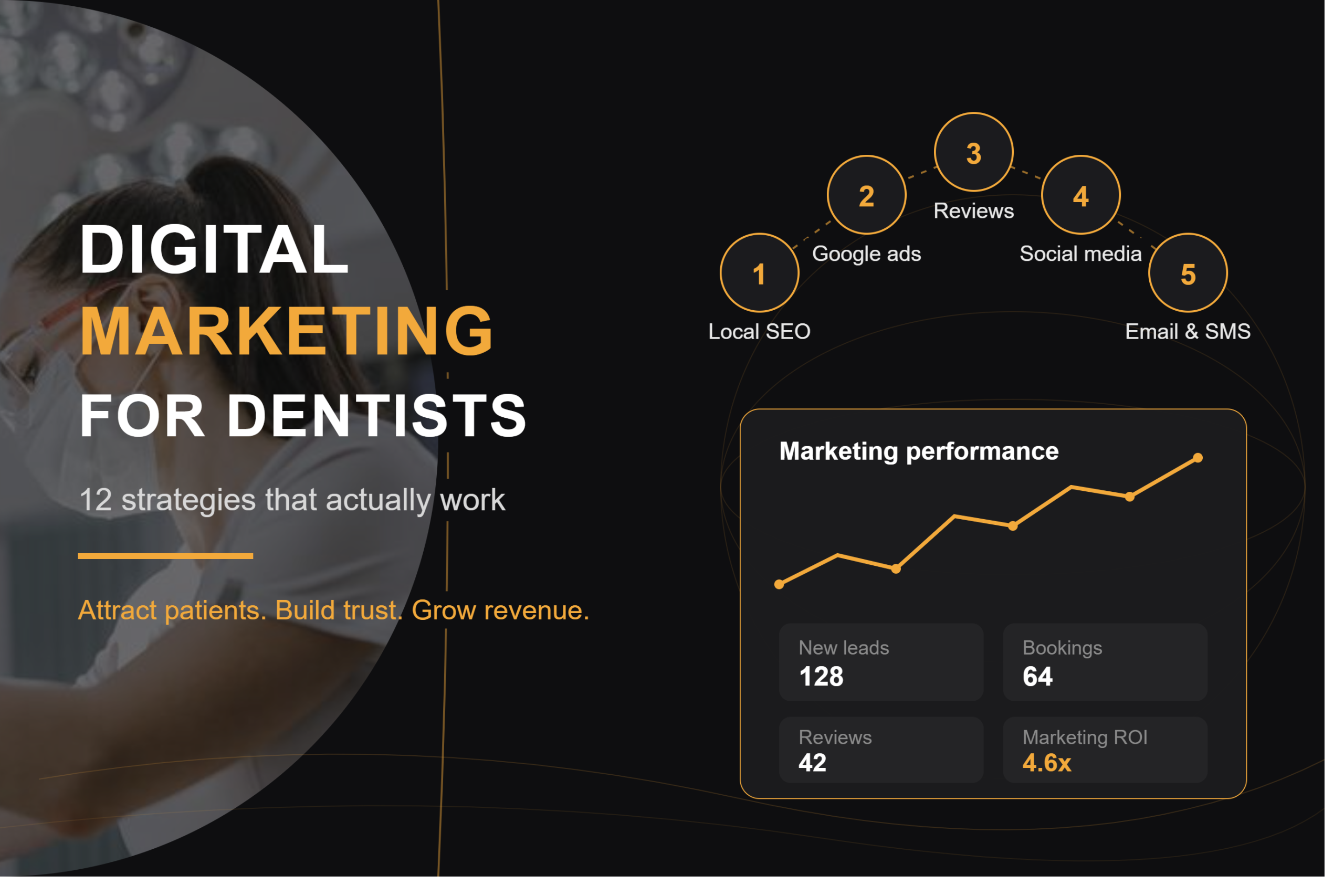
Most dental practices invest in digital marketing but struggle to see real results. They have a website, run a few ads, and post on social media, yet they can’t tell which efforts are actually bringing new patients through the door. The problem isn’t that digital marketing doesn’t work, it’s that every marketing channel is treated the same, and success is often measured by likes and followers instead of patient bookings and revenue.
The reality is that effective digital marketing for dentists starts with understanding the patient journey. Every channel has a different purpose, from building awareness and trust to generating appointments. As a dentist, your primary focus is delivering exceptional patient care, leaving little time to keep up with constantly changing marketing strategies. However, in today’s digital first world, relying on word-of-mouth alone is no longer enough to grow a successful dental practice.
In this guide, you’ll discover 12 effective digital marketing strategies for dental practices that can help increase your online visibility, attract more patients, and drive long-term practice growth.
Why Most Dental Practices Fail at Digital Marketing
A potential patient finds your dental practice online and considers booking an appointment. But within minutes, they notice an outdated website, struggle to find your contact information, see unanswered negative reviews, and realize your social media hasn’t been updated in months. Instead of calling you, they choose a competitor who appears more trustworthy and active online.
The worst part? You may never know that patient was lost. Your ads may still show clicks, your website may still receive traffic, and your social media may report good reach, but none of those metrics guarantee new patient appointments.
This is why many dental practices struggle with digital marketing. The problem isn’t that digital marketing doesn’t work; it’s that every channel operates in isolation. Without a connected strategy that guides patients from discovery to booking, you’re missing opportunities and losing potential revenue without even realizing it.
12 Most Effective Digital Marketing Strategies for Dental Practice
1. Brand Identity
Your brand is more than your logo, website, or practice name, it’s the experience and impression patients have every time they interact with your dental practice. Whether they visit your website, read your blog, open an email, or find you on social media, every touchpoint should communicate the same message and build trust.
A strong brand helps your practice stand out in a competitive market while creating an emotional connection with patients. Consistent branding across all digital channels makes your practice more recognizable, memorable, and trustworthy. Building a clear brand strategy is one of the most important long-term investments you can make to attract and retain patients.
2. Use High-Quality Photography on Social Media
Social media is one of the most effective ways to showcase your dental practice, but success starts with high-quality visuals. Clear, professional photos and engaging captions instantly create a better first impression, while blurry or poorly edited images can negatively affect how patients perceive your expertise. Remember, in digital marketing, perception often becomes reality.
Investing in dental photography equipment or training can help you capture stunning before-and-after results that attract cosmetic dentistry patients. Consistently posting professional photos and videos also keeps your practice active and improves visibility on social platforms. Since algorithms reward fresh content, a single outstanding image or video can significantly expand your reach.
To organize your content and strengthen your brand, create custom hashtags for your most popular dental treatments, such as teeth whitening, dental implants, Invisalign, or smile makeovers.
For example, if you regularly share smile makeover transformations, you could use a unique hashtag like #SmileMakeoversByDrBrown on every related post. This creates a searchable digital portfolio where potential patients can easily browse your work and see consistent treatment results. Before using a custom hashtag, make sure it’s unique and not already associated with another practice or brand.
3. Social Media
Social media is about much more than posting great photos, it’s about building trust and creating meaningful connections with current and potential patients. Respond to comments and messages, answer questions, and share content that reflects your practice’s personality and values. The more authentic and consistent you are, the more likely people are to remember and choose your practice.
Show the people behind your practice by sharing patient success stories (with permission), community events, team celebrations, oral health tips, and behind-the-scenes moments. Today’s patients connect with real experiences, not just promotional posts. A strong social media presence also increases credibility and helps attract new patients through shares, recommendations, and word-of-mouth online.
For example, if you participate in a local school dental awareness program or sponsor a community event, share photos and short videos from the day. Content like this highlights your involvement in the community and builds trust with families looking for a caring, approachable dentist.
4. Local Search Engine Optimization (SEO)
When someone searches “dentist near me” or “emergency dentist in [your city],” your practice should be one of the first results they see. That’s exactly what Search Engine Optimization (SEO) helps you achieve. By optimizing your website with relevant keywords, high-quality content, fast loading speeds, and a great user experience, you can improve your rankings and attract patients who are actively searching for dental services.
SEO delivers long-term value by generating consistent organic traffic and qualified leads. Publishing helpful blog posts, treatment pages, FAQs, and location-specific content also builds your authority while making it easier for search engines to understand your website.
Local SEO is equally important. Claim and optimize your Google Business Profile, keep your contact information and business hours up to date, upload high-quality photos, and regularly collect patient reviews.
For example, if someone searches “Invisalign dentist in Austin” or “family dentist near downtown Dallas,” a well-optimized website and Google Business Profile can help your practice appear in local search results and Google Maps, bringing more patients directly to your office.
If you need expert support with Dental SEO, Local SEO, Google Business Profile optimization, content marketing, consider partnering with us. We are a full service digital marketing agency US that helps dental practices attract more local patients and grow online.
5. Patient Reviews
In today’s digital world, online reviews are the new word of mouth. Before choosing a dentist, most people search Google, compare ratings, and read patient experiences. A strong collection of positive reviews builds trust, improves your online reputation, and often becomes the deciding factor between your practice and a competitor.
The key to earning more reviews is delivering an outstanding patient experience and consistently asking satisfied patients to share their feedback. Many practices miss this opportunity simply because they never ask. Make requesting reviews part of your patient follow-up process by sending a friendly text or email with a direct review link shortly after an appointment.
For example, after a successful teeth whitening treatment, your front desk can send a text saying, “Thank you for visiting our practice today! We’d love to hear about your experience. If you have a minute, please leave us a Google review.” Even collecting 5–10 new reviews each month can significantly improve your local visibility and attract more new patients.
6. Google Ads (PPC)
Google Ads (Pay-Per-Click or PPC) allows your dental practice to appear at the top of Google search results when people actively search for treatments like “emergency dentist near me,” “dental implants,” or “Invisalign provider.” Unlike SEO, which takes time to build, Google Ads can generate qualified patient inquiries almost immediately.
With PPC, you only pay when someone clicks your ad, making it an effective way to reach patients who are ready to book an appointment. However, running a successful campaign requires more than simply creating ads. Your campaigns should include targeted keywords, compelling ad copy, optimized landing pages, location extensions, call extensions, and carefully managed budgets.
For example, if your practice specializes in dental implants, you can create a campaign targeting searches such as “dental implants in Chicago” or “missing tooth replacement near me.” At the same time, adding negative keywords like “free,” “dental school,” or “jobs” prevents your ads from appearing in irrelevant searches, helping you reduce wasted ad spend and improve your return on investment.
7. YouTube Videos
YouTube is one of the best platforms for educating potential patients and building trust before they ever visit your practice. Create short, easy-to-understand videos that answer common dental questions, explain treatments, or share oral health tips. When patients see your expertise on camera, they’re more likely to feel confident choosing your practice.
Patient testimonial videos are equally powerful. Hearing real patients talk about their positive experiences adds credibility and helps future patients feel more comfortable booking an appointment. As your channel grows, your videos can also increase website traffic, improve SEO, and strengthen your online visibility.
For example, create a video titled “What to Expect During Your First Invisalign Consultation” or “5 Signs You May Need a Dental Crown.” Optimize each video with relevant titles, descriptions, and keywords so patients can easily find your content through YouTube and Google search.
8. Email Marketing
Email marketing helps dental practices stay connected with patients, increase appointment attendance, and build long-term loyalty. It’s much more than sending promotional emails. With automated email campaigns, you can deliver the right message at the right time while saving valuable staff time. Marketing automation is widely credited with cutting down staff time spent on manual reminders and follow-ups, making it one of the most effective patient communication tools.
For example, when a patient books an appointment, they can automatically receive a welcome email with directions to your office, digital forms, and appointment details. After their visit, you can schedule a follow-up email requesting a Google review and later send a personalized referral email encouraging them to recommend your practice to friends and family. These small touchpoints strengthen relationships, improve patient satisfaction, and help generate more referrals with minimal manual effort.
9. WhatsApp Marketing
WhatsApp marketing is one of the easiest and most effective ways to stay connected with your patients. Since many people use WhatsApp every day, it provides a fast, convenient, and personal way to communicate without overwhelming patients with emails or phone calls.
Use WhatsApp to send appointment confirmations, reminders, post-treatment care instructions, prescription updates, and follow-up messages. You can also share oral health tips, announce new services, promote seasonal offers, or remind patients about upcoming cleanings and checkups. These timely, personalized messages help improve patient satisfaction while reducing missed appointments.
For example, if a patient books a teeth whitening appointment, you can send a WhatsApp confirmation with the appointment details, followed by pre-treatment instructions the day before. After the visit, send aftercare tips and, a few days later, a friendly message asking about their experience along with a link to leave a Google review. This simple communication flow builds stronger relationships, encourages repeat visits, and increases positive patient reviews.
10. Strategic Partnerships
Partnering with complementary healthcare and wellness businesses is an effective way to attract new patients and grow your dental practice. Instead of promoting your services alone, collaborate with trusted professionals who serve a similar audience, such as dermatologists, orthodontists, plastic surgeons, medical spas, pediatric clinics, or family physicians. Offering bundled services or referral partnerships creates more value for patients while helping your practice stand out in a competitive market.
These collaborations benefit everyone involved. Patients from each business become aware of the other’s services, allowing both practices to expand their reach without significantly increasing their marketing budget. For cosmetic and family dentists, partnering with facial aesthetic providers or healthcare professionals creates a better overall patient experience while generating a steady stream of qualified referrals.
Example Scenario: A cosmetic dental practice partnered with a local medical spa to offer a “Smile & Confidence Makeover” package that combined professional teeth whitening with skin rejuvenation treatments. The two businesses promoted the package through email marketing, social media, and in-office referrals. Within a few months, both practices saw an increase in cross-referrals, higher patient engagement, and more bookings for premium cosmetic services.
11. Writing a Book
Publishing a book is one of the most effective ways to position yourself as a trusted expert in dentistry. It isn’t about becoming a bestselling author, it’s about sharing your knowledge, educating patients, and building long-term credibility. A well-written book helps distinguish your practice from competitors while strengthening your personal brand.
Focus on topics your patients frequently ask about, such as cosmetic dentistry, dental implants, oral hygiene, or overcoming dental anxiety. You can self-publish through platforms like Amazon or work with a professional ghostwriter to help organize your ideas. Think of your book as an extension of your practice, a valuable resource that builds trust long before a patient schedules an appointment.
For example, a cosmetic dentist could publish a book titled “The Complete Guide to Smile Makeovers”, answering common patient questions about veneers, teeth whitening, and dental implants. Offering a free digital copy on your website can also help generate qualified leads and grow your email list.
12. Dental Podcast
Podcasting is another powerful way to showcase your expertise and connect with potential patients. Many people prefer listening to podcasts while driving, exercising, or commuting, making it an easy way to share valuable dental advice and strengthen your reputation.
Create episodes around common patient concerns, explain treatment options, discuss oral health tips, or interview other healthcare professionals to provide additional value. The goal isn’t to attract millions of listeners, it’s to become the trusted local expert patients remember when they need dental care.
For example, you could launch a weekly podcast called “Healthy Smiles Podcast”, featuring episodes like “How Often Should You Replace a Dental Crown?”, “The Truth About Teeth Whitening”, or “How Invisalign Works.” You can also invite orthodontists, nutritionists, or dental hygienists as guests to offer expert insights while expanding your professional network and audience.
Use These Effective Digital Marketing Strategies for Your Dental Practice
The right digital marketing strategy doesn’t just increase website traffic, it brings more qualified patients through your doors. From local SEO and Google Ads to social media, content marketing, reputation management, and AI-powered search optimization, every channel should work together to grow your practice and maximize your return on investment.
At Real Global Marketing, we help dental practices build data-driven marketing strategies that increase online visibility, attract high-value patients, and generate consistent appointment bookings. Our team delivers customized marketing solutions designed to help your practice grow faster, strengthen your reputation, and achieve long-term success. Contact us today for a free digital marketing consultation.
FAQs
1. Which is better for a dental practice: Google rankings (SEO) or paid ads (PPC)?
Both SEO and PPC are valuable, but they serve different purposes. SEO helps your dental practice build long-term visibility and attract consistent organic traffic, while Google Ads (PPC) generates immediate visibility and leads. The best strategy is to combine both use PPC for quick patient acquisition and SEO for sustainable, long-term growth.
2. Which digital marketing channel brings the most new patients to a dental practice?
There isn’t a single channel that works for every practice. However, Google Search (SEO), Google Business Profile, Google Ads, and online reviews tend to generate the highest number of qualified patient inquiries. Supporting these channels with content marketing, email marketing, and social media creates a stronger patient acquisition strategy.
3. How can I measure whether my dental marketing is actually working?
Track the metrics that directly impact your practice, such as new patient appointments, phone calls, online bookings, website conversions, cost per lead, and return on investment (ROI). Avoid focusing only on vanity metrics like followers or website visits. The most important measure of success is whether your marketing is generating more patients and increasing revenue.
4. How does Practice by Numbers help track marketing ROI and patient revenue?
Practice by Numbers helps dental practices connect marketing performance with real business results. Its Marketing IQ tool tracks where new patients come from, monitors treatment acceptance, measures patient lifetime value, and calculates marketing ROI, allowing you to see which campaigns generate the highest revenue and make more informed marketing decisions.
5. Is social media marketing worth it if it doesn’t generate patients directly?
Yes. While social media may not always produce immediate appointments, it plays an important role in building trust, brand awareness, and patient engagement. Sharing educational content, patient testimonials, before-and-after results, and practice updates helps establish credibility, making potential patients more likely to choose your practice when they’re ready to book an appointment.